Maize :
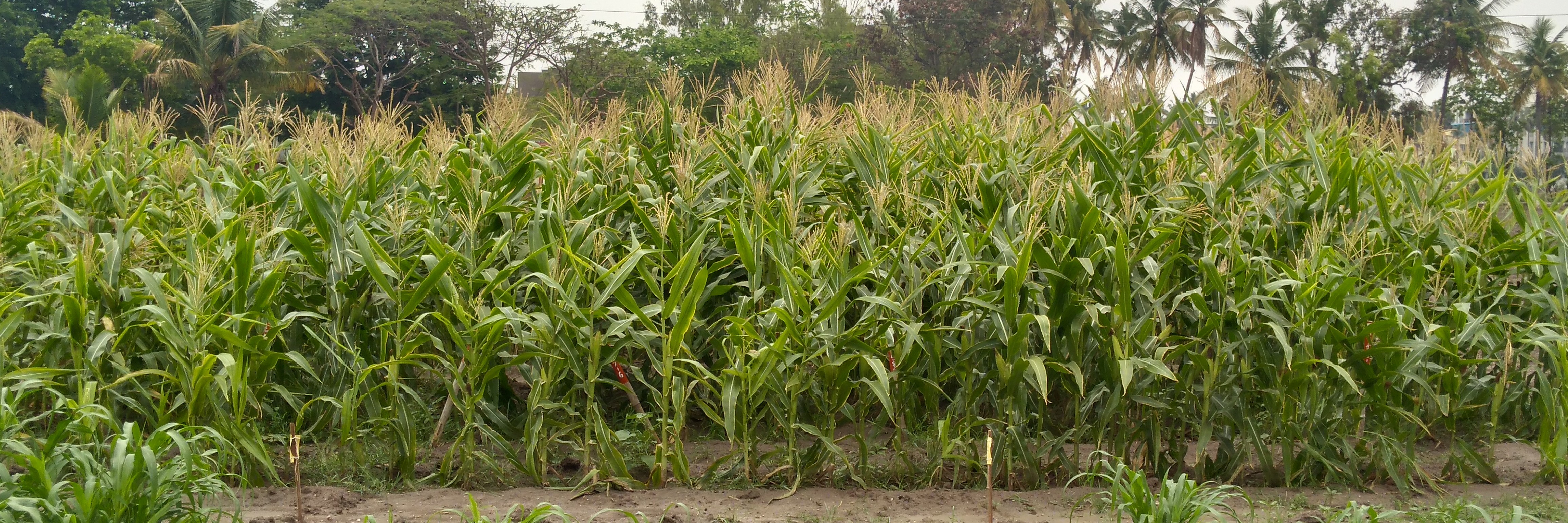
Maize (Zea mays subsp of mays, from Spanish), also known as corn, is a cereal grain first domesticated by indigenous peoples in southern Mexico about 10,000 years ago.Maize is an important crop ,mainly cultivated in karnataka,Rajasthan and Madhya pardesh. Over the years, advances in molecular genetics methodology have lead to widespread use of codominant molecular markers, especially Simple Sequence Repeats (SSRs) and, more recently, Single Nucleotide Polymorphisms (SNPs).
Microsatellite or simple sequence repeat (SSR) markers have wide applicability for genetic analysis in crop plant improvement strategies. In the major cereals,microsatellites have been categorized based on different criteria. Using publicly available DNA sequence information on the maize genome, categorized microsatellites based on length and noticed that longer perfect repeats (≥ 20 nucleotides) were highly polymorphic. Microsatellites with SSRs shorter than 12 bp were found to have a mutation potential no different from that of most unique sequences. In addition to maize being an economically important crop, is also a classical genetic model for plants research.It has a number of characteristics that are favourable for an experimental model for crop plants.
Maize being an economically important crop,is also a classical genetic model for plant reaserch.it has a number of charecteristics that are favourable for an experimental model for crop plants.A multiple purpose crop with worldwide cultivation which attracts research funding from public and private institutions. Maize has 42000-56000 genes with moderate genome size (2400Mb of per haploid nucleus in the B73 inbred) which is approximately six times larger than rice and six times smaller than wheat, although a large proportion of the genome represented by repetitive elements.